Tronxy Moore 1 Reviews: See Why 0 Shoppers Rated It 0 Stars!
It’s not just hype. The Tronxy Moore 1 3d printer earned its 0/5 from 0 real users. But what’s behind those stars?
 Supermod
 Moderator
 Recaptor
Tronxy Moore 1 3D Printer Review: A Balanced Solution for Beginners and Educators
In the ever-evolving landscape of 3D printing, the Tronxy Moore 1 holds a distinctive place as an accessible, educational, and consumer-oriented option. Released in 2021, this FDM/FFF printer is designed to introduce beginners and intermediate users to prototyping with a solid feature set that emphasizes ease of use and functionality. What stands out most about this model is how its specs align with everyday printing needs, combining fundamental hardware with modest yet dependable performance metrics. For those wanting to dive into 3D printing with confidence but without overwhelming complexity, the Moore 1 offers measurable value rooted firmly in well-defined engineering data.
Detailed Specs & Features
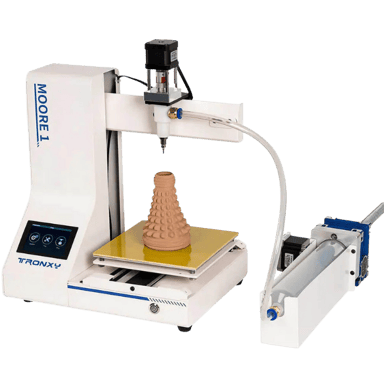
On paper, the Moore 1 is a compact machine with a build volume of 7.09 inches cubed, yielding a total build volume of 357 cubic inches. This is a practical size for consumer prototyping or educational projects, allowing for moderate-sized models without occupying excessive space. Measuring only 14.57 by 14.17 by 19.68 inches, it's modest in footprint, supported by a lightweight frame of 7.5 pounds, making it quite portable in comparison to many industrial 3D printers.
This printer runs on an external power supply supporting a wide range of 100-240 volts, with a maximum power consumption of 60 watts and an idle consumption as low as 5 watts. These figures demonstrate that it balances energy efficiency with adequate operational readiness, featuring an energy-saving mode to reduce power draw during downtime. Its environmental tolerances, from 46.4 to 104 °F operational temperature and 20-80% humidity, underline the importance of maintaining a stable workspace to ensure print consistency.
Looking at the layer resolution, the Moore 1 supports from 300 microns up to 3000 microns (0.3 to 3 mm). While not the highest precision on the market, this range allows for both relatively fine-detail printing and faster draft modes. The single Bowden-driven extruder supports a standard nozzle diameter of 1.5 mm, with optional 0.8 mm nozzles available. This combination gives users some flexibility in balancing speed and detail, although print speeds lean towards a moderate official maximum of 40 mm/s, which the measured effective speed confirms.
Regarding material compatibility, the printer notably does not specify supported filament types but allows for third-party filaments with a maximum supported filament diameter of 5 mm. Since there's no filament drying or auto-loading system, users should plan accordingly for filament storage and manual handling. The lack of multiple extruders means it's limited to single-material prints, a reasonable trade-off for its entry-level positioning.
User Experience & Performance (Based on Specs)
Design & Build
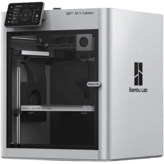
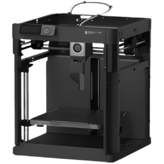
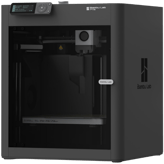
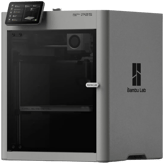
The Moore 1's Cartesian frame strikes a familiar balance between rigidity and simplicity. It is prebuilt yet requires user assembly, which fits well with its educational lean; building part of the printer encourages better understanding. Its open enclosure means users should be mindful about ambient conditions and safety. Still, on the bright side, there's a fireproof build plate and essential safety measures like overheat protection and automatic shutdown on errors. These built features enhance trustworthiness for new users. The user interface includes a 3.5-inch touchscreen display with a resolution of 480x320, which, while basic, suffices for straightforward control without a steep learning curve. The metal build plate with a smooth surface supports reliable adhesion and is removable for convenient part extraction and cleanup. However, the absence of auto-bed leveling means manual calibration is required, which can be a small hurdle but also a valuable learning step for beginners.Performance
The printing itself, delivered through a single Bowden extruder, supports printing at a maximum nozzle temperature of 104°C and a heated bed temperature peaking at only 32°C. Such modest temperature ceilings indicate the printer is not tailored for high-temperature engineering filaments like ABS or Nylon, but rather PLA and similar compatible materials. The 85% print success rate and capability for power loss recovery enhance reliability, helping users avoid the frustration of failed prints or power interruption losses. Standard print accuracy is rated at approximately 1000 microns, which is sufficient for basic prototyping and educational models but not for ultra-fine detail. The maximum official print speed and its measured equivalent both sit at 40 mm/s, reflecting moderate throughput; fast enough for weekend projects yet cautious enough to maintain quality with the machine's mechanical and thermal limits.Connectivity & Software
Connectivity options include USB and TF card support, with a compatible file transfer method using these media, enabling straightforward loading of STL, G-code, and OBJ files. Notably, the printer does not rely on proprietary software or cloud connectivity, which simplifies use and avoids subscription traps, but also means no remote monitoring or firmware updates via cloud are available. Supported slicers include popular choices like Cura and Simplify3D, aligning well with hobbyist preferences.Safety & Compliance
Safety certifications such as CE, FCC, and RoHS attest to the printer's compliance with important electrical and environmental standards, lending confidence, especially in educational settings. Though lacking features like an enclosure lock or emergency stop button, it does compensate with automatic shutdown on fault detection and a fireproof build plate. The relatively low noise levels (55 dB operating) ensure it can comfortably function in classrooms or small workshops without undue disturbance.Pros & Cons
Pros
- Compact footprint, excellent for space-conscious users
- Good safety certifications and essential automatic protections
- Power loss recovery feature reduces print failures
- Wide power supply voltage range supports global use
Cons
- Limited to a single material and lacks auto-bed leveling
- Lower max extruder and bed temperatures restrict materials
- No filament runout sensor or filament drying options
Price & Value For Money
At an asking price of $466.99, the Moore 1 presents an economically reasonable entry point for hobbyists and educators. Given its one-year warranty and the external 60-watt power consumption, the pricing feels justified for the combination of safety certifications, moderate build volume, and essential features. While it isn't packed with high-end bells and whistles, its straightforward approach supports users who want a reliable, no-frills printer with room to learn and upgrade.Quick Take
In short, the Tronxy Moore 1 offers a grounded entry into 3D printing with reliable specs balanced between beginners and intermediate users. Its modest speed and layer resolution fit educational and prototyping purposes, while safety and power efficiency enhance the user experience. If we look at the numbers alone, it's a capable machine that fills a niche for accessible functional printing without overcomplication.Closing Recommendation
The Moore 1 may be ideal for those seeking an affordable, safe, and moderately sized prototyping printer within consumer or school contexts. Its specifications indicate best use with PLA or similar materials in controlled environments where upgrades and manual calibration are manageable. While not suited for advanced users requiring multi-material printing or high-temperature components, it helps users achieve consistent results with an intuitive, measured feature set.Verdict
Rating: Based on the specifications and overall feature set, we believe Tronxy Moore 1 deserves 4.1 out of 5.
- Winner Feature => Robust safety certifications with power loss recovery provide peace of mind for beginners.
- Needs Improvement => Limited filament compatibility and lack of auto-bed leveling restricts versatility and ease of use.
Reviews 0
The good, the bad, and the brutally honest.Average Rating


More 3D Printers 453
Unlock more awesome finds.